
Dog Training Hand Signals Chart PDF: A Comprehensive Guide
Discover a valuable resource for enhancing canine communication! This guide details utilizing a dog training hand signals chart PDF, offering visual clarity and streamlined instruction for effective training sessions.
Hand signal training represents a powerful and often underutilized method for communicating with your canine companion. It transcends verbal commands, offering a visual language that dogs readily understand, leveraging their keen observation skills. This approach is particularly beneficial as dogs perceive visual cues with impressive accuracy, responding effectively to body language and gestures.
Unlike relying solely on auditory commands, hand signals minimize potential confusion caused by background noise or distance. A dog training hand signals chart PDF serves as an invaluable tool, providing a clear, concise visual reference for both you and your dog. It simplifies the learning process, establishing consistent cues for various behaviors.
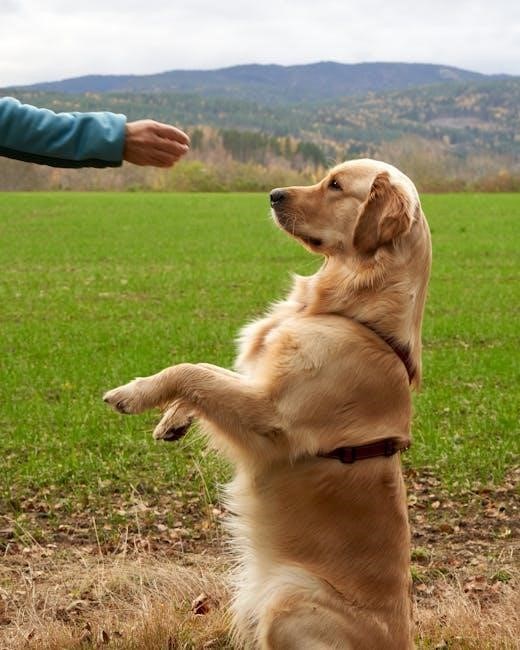
Historically rooted in leash-based training – where signals mimicked leash movements – modern hand signal training has evolved. It now focuses on distinct, easily recognizable gestures. Utilizing a chart ensures consistency, accelerating learning and strengthening the bond between you and your furry friend. This method is adaptable for dogs of all breeds and ages, fostering clearer communication and a more harmonious relationship.
Why Use Hand Signals for Dog Training?
Employing hand signals in dog training offers numerous advantages over solely verbal commands. Dogs communicate through body language and visual cues, making hand signals a natural and intuitive method for them to learn. A dog training hand signals chart PDF enhances this process, providing clear visual references.
Hand signals bypass potential distractions like noise, distance, or a dog’s selective hearing. They are particularly useful for dogs with hearing impairments, offering a reliable communication pathway. Furthermore, hand signals allow for discreet communication in public settings, avoiding unwanted attention or disruptions.
The visual nature of hand signals can also accelerate learning, as dogs often grasp visual cues more quickly than verbal ones. A well-structured chart promotes consistency, minimizing confusion and maximizing comprehension. This method strengthens the human-animal bond, fostering a deeper level of understanding and responsiveness. Ultimately, hand signals create a more versatile and effective training experience, benefiting both dog and owner.
The History of Hand Signals in Dog Training (Leash-Based Origins)
Historically, many foundational dog training hand signals originated from practical leash handling techniques. Early trainers instinctively used the leash to guide dogs into desired positions, and these movements gradually evolved into distinct hand signals. For example, the upward swoop often associated with the “sit” command mimics the action of lifting the leash to encourage a dog to sit from a down position.
Similarly, the “come” or “front” signal, involving an arm folding towards the chest, reflects the reeling-in motion used with a leash. These early methods, while effective, weren’t initially conceived as independent signals but rather as extensions of leash control.
As training methodologies advanced, trainers recognized the power of isolating these movements and utilizing them as standalone cues. A dog training hand signals chart PDF now represents a formalized system built upon these practical, leash-based origins. Observing experienced trainers in obedience competitions reveals the subtle differences in signals based on their training background and reliance on leash work.
Understanding How Dogs Perceive Hand Signals
Dogs possess a remarkable ability to interpret visual cues, making hand signals a highly effective training method. Unlike humans who primarily rely on verbal communication, dogs process information through a combination of body language, visual signals, and scent. They are exceptionally receptive to non-verbal cues, often understanding hand signals with impressive accuracy.
This heightened visual perception stems from their evolutionary history and reliance on observing subtle movements for survival. A dog training hand signals chart PDF capitalizes on this natural ability, providing clear and consistent visual prompts. Dogs don’t necessarily analyze the signal’s meaning intellectually; instead, they associate the gesture with a specific behavior through positive reinforcement.
Understanding that dogs communicate through limited vocalizations and extensive body language is crucial. Hand signals bypass the potential for misinterpretation inherent in verbal commands, offering a more direct and universally understood form of communication.
Essential Hand Signals: The Core Commands
Mastering foundational commands through hand signals is the cornerstone of effective dog training. A dog training hand signals chart PDF typically focuses on four core commands: Sit, Down, Stay, and Come/Recall. These form the basis for more complex behaviors and ensure clear communication with your canine companion;
The “Sit” signal often involves a straight arm moving downwards, palm facing outwards. “Down” is frequently indicated by a flat hand sweeping downwards. “Stay” commonly utilizes a palm facing outwards, held in a stopping gesture. For “Come/Recall”, an extended arm folding towards the chest, or a beckoning motion, is often employed.
Consistency is paramount. Each signal should be paired with a verbal cue initially, then gradually phased out as the dog associates the gesture with the desired action. Utilizing a chart ensures you maintain consistent signals throughout the training process, maximizing clarity and minimizing confusion for your dog.
Sit: Hand Signal and Execution
The “Sit” command is often the first taught, and a dog training hand signals chart PDF will illustrate a common signal: a straight, vertical arm lowered with the palm facing outwards and fingers pointing down. Begin with your dog standing, and simultaneously say “Sit” and execute the hand signal.
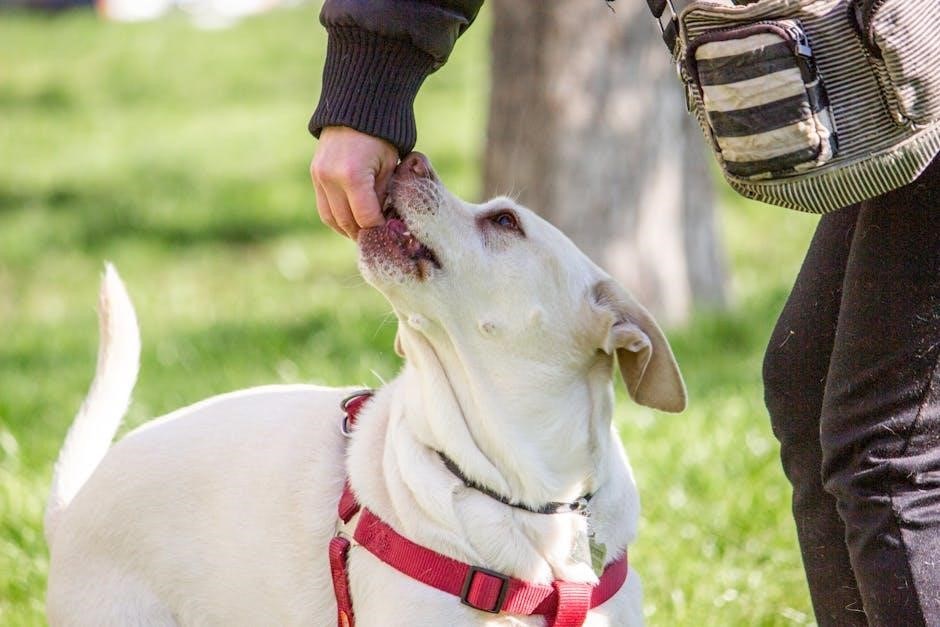
Initially, you may need to lure your dog into the sit position using a treat, guiding their nose upwards and backwards. As they lower their rear, reward them immediately with praise and the treat. Repeat this process, gradually reducing reliance on the lure.
Focus on timing – the reward must coincide exactly with the desired behavior. Ensure your signal is clear and consistent. Avoid jerky movements. As your dog understands, fade the verbal cue, relying solely on the hand signal. Practice in various locations to generalize the behavior.
Down: Hand Signal and Execution
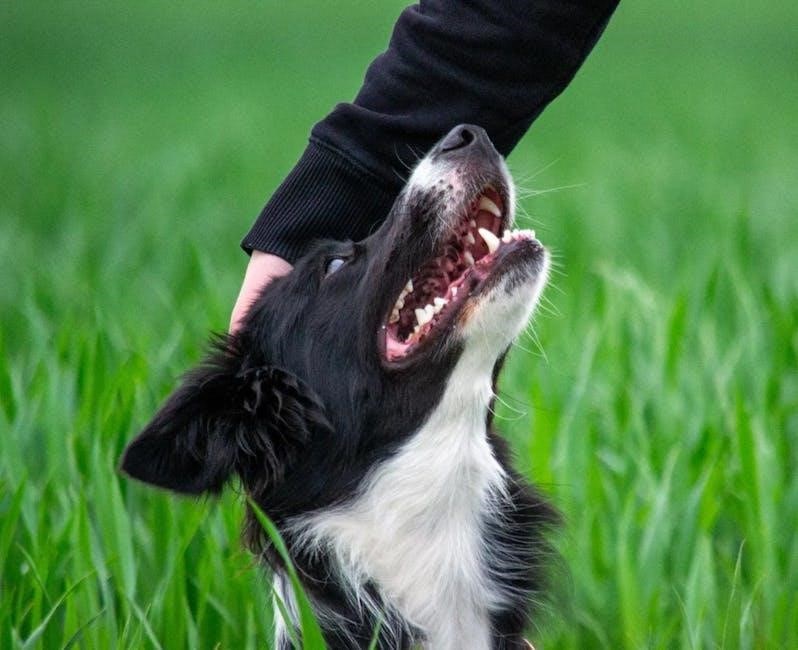
The “Down” command, visualized on a dog training hand signals chart PDF, typically employs a flat, open palm facing downwards, moving in a sweeping motion towards the floor. Start with your dog in a sit or stand. Say “Down” and simultaneously lower your hand, encouraging them to lie down.
Luring with a treat can be effective; move the treat from their nose towards the floor, guiding them into the down position. Reward immediately upon completion. Some dogs find “Down” challenging, so break it into smaller steps. Reward any lowering of the body initially.
Consistency is key. Ensure the hand signal is always the same. Avoid pushing or forcing your dog into the position. Gradually fade the lure, relying more on the hand signal and verbal cue. Practice in different environments to solidify the command. Patience and positive reinforcement are crucial for success.
Stay: Hand Signal and Execution
The “Stay” command, clearly depicted on a dog training hand signals chart PDF, commonly utilizes an open palm facing the dog, similar to a “stop” gesture. Begin with your dog in a “Sit” or “Down” position. Say “Stay” and simultaneously present your open palm.
Initially, only ask for a very short stay – just a second or two. Reward immediately if they remain in position. Gradually increase the duration of the stay, adding a second at a time. Introduce distance slowly, taking a small step back while maintaining the hand signal.
If your dog breaks the stay, calmly return them to the original position and start again with a shorter duration. Avoid repeating the command multiple times. Remember, consistency and positive reinforcement are vital. A clear visual cue, as shown on the chart, aids understanding.
Come/Recall: Hand Signal and Execution
The “Come” or “Recall” command, essential for safety and often featured on a dog training hand signals chart PDF, traditionally employs an arm folding into the chest, mimicking reeling in a leash. Start in a quiet, distraction-free environment. Say “Come” enthusiastically and simultaneously use the hand signal.
As your dog moves towards you, continue to encourage them with verbal praise. Reward generously with treats and affection when they reach you. Gradually increase the distance and introduce distractions. Practice in various locations.
Avoid using “Come” when you’re angry or to deliver punishment, as this will create a negative association. A reliable recall is built on positive reinforcement and trust. The visual cue from the chart reinforces the verbal command, improving responsiveness.
Advanced Hand Signals for Enhanced Communication
Beyond foundational commands, a dog training hand signals chart PDF can unlock a world of advanced communication. Consider “Speak,” often taught by a raised, open palm towards the dog’s face, encouraging vocalization. Reward any bark initially, then refine the signal for on-demand barking;
“Shake” utilizes a hand presented palm-down, prompting the dog to lift a paw. “Roll Over” is more complex, often involving a circular hand motion near the dog’s shoulder. Consistency is key; pair each signal with a clear verbal cue.
These advanced signals aren’t just tricks; they deepen the bond and provide mental stimulation. A well-designed chart PDF will visually demonstrate these signals, aiding both dog and owner. Remember to break down complex signals into smaller, achievable steps, reinforcing success with positive rewards.
Speak: Hand Signal and Training Tips
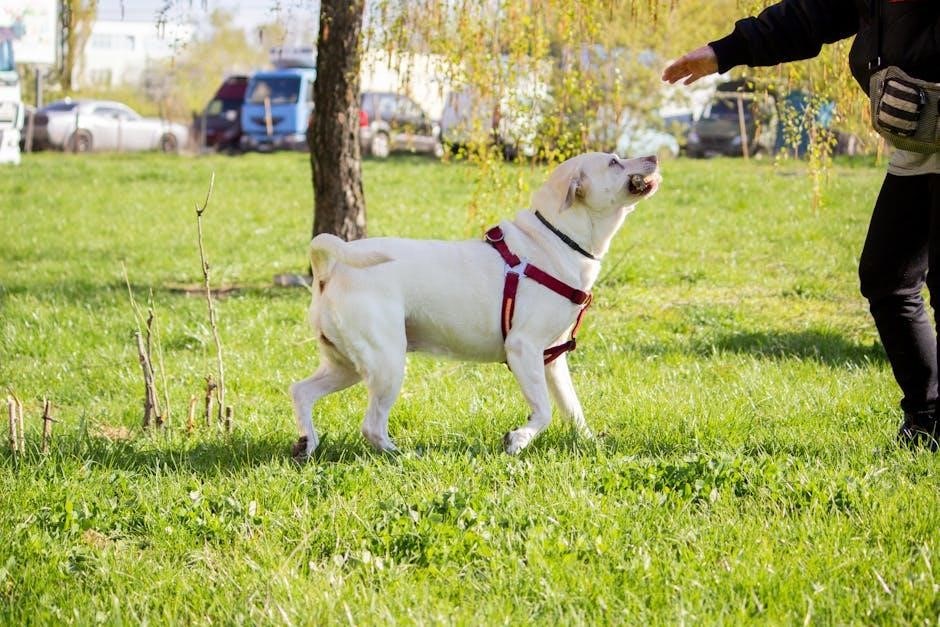
Teaching your dog to “Speak” using a dog training hand signals chart PDF can be surprisingly effective. The commonly used hand signal involves raising an open palm towards the dog’s face, sometimes coupled with a questioning expression. Initially, capture the behavior – reward any bark, even accidental ones.
As your dog understands the reward association, begin pairing the hand signal before they bark. Gradually, they’ll anticipate the cue. Consistency is paramount; use the same signal each time. Avoid prompting frustration – keep sessions short and positive.
A PDF chart provides a visual reminder of the signal. Remember, some dogs are naturally quieter than others, requiring more patience. Once mastered, “Speak” can be useful for alerting or simply as a fun trick. Always end on a successful note!
Shake: Hand Signal and Training Tips
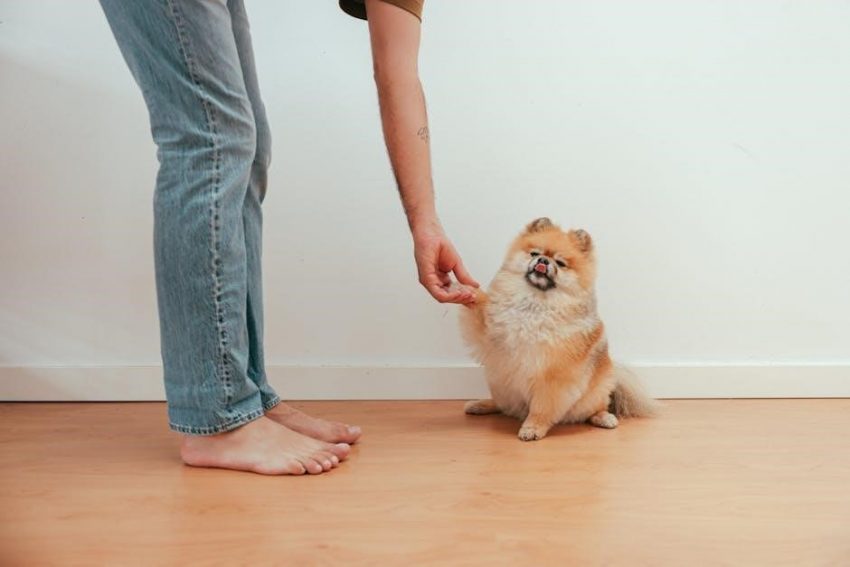
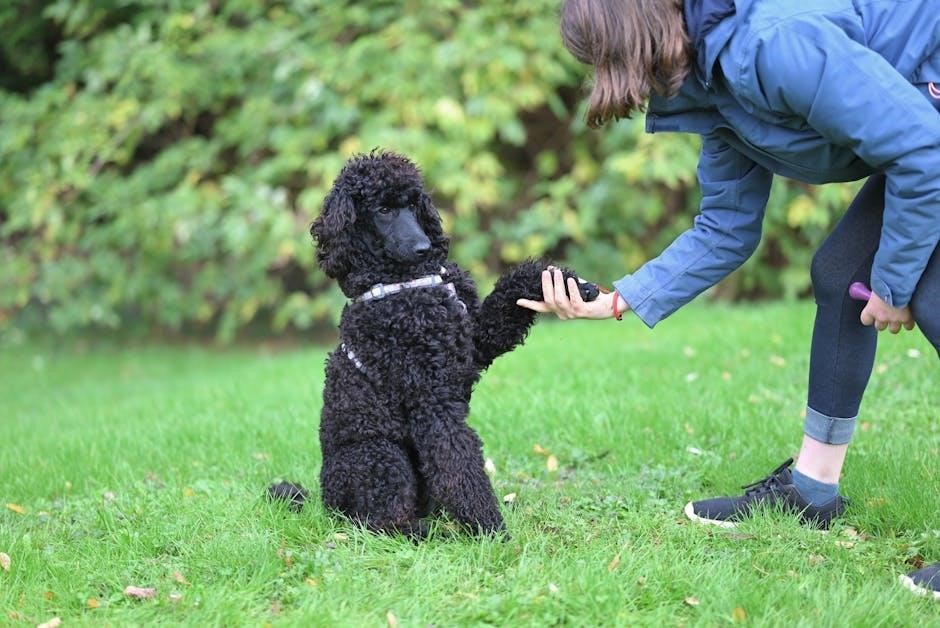
Introducing the “Shake” command with a dog training hand signals chart PDF is a delightful way to bond with your canine companion. The typical hand signal involves extending your open palm, flat and low, towards your dog’s paw. Begin by gently taking your dog’s paw in your hand, saying “Shake,” and immediately rewarding them.
As they associate the action with the reward, present your hand and wait for them to lift their paw. Gradually, they’ll offer it proactively. A visual chart reinforces the signal for both you and anyone else training your dog. Keep sessions brief and positive, focusing on encouragement.
Some dogs may initially be hesitant; patience is key. Avoid forcing their paw. Celebrate small successes and remember to use consistent verbal cues alongside the hand signal. “Shake” is a charming trick and a great confidence booster for your furry friend!
Roll Over: Hand Signal and Training Tips
Teaching your dog to “Roll Over” using a dog training hand signals chart PDF adds a fun and impressive trick to their repertoire. The common hand signal involves a circular motion with your index finger, mimicking the rolling action. Start with your dog in a “Down” position.
Lure them with a treat, moving it around their head to encourage a roll. As they begin to roll, say “Roll Over” and reward immediately upon completion. Repeat this process, gradually phasing out the lure and relying more on the hand signal and verbal cue. A clear chart helps maintain consistency.
If your dog struggles, break the trick into smaller steps. Reward any attempt to shift their weight. Patience and positive reinforcement are crucial. Remember to keep training sessions short and enjoyable. “Roll Over” is a fantastic way to mentally stimulate your dog and strengthen your bond!
Creating Your Own Dog Training Hand Signals Chart PDF
Personalizing a dog training hand signals chart PDF allows for tailored communication with your canine companion. Begin by listing the commands you wish to teach – Sit, Down, Stay, Come, and any advanced tricks. Next, design a unique and easily distinguishable hand signal for each command.
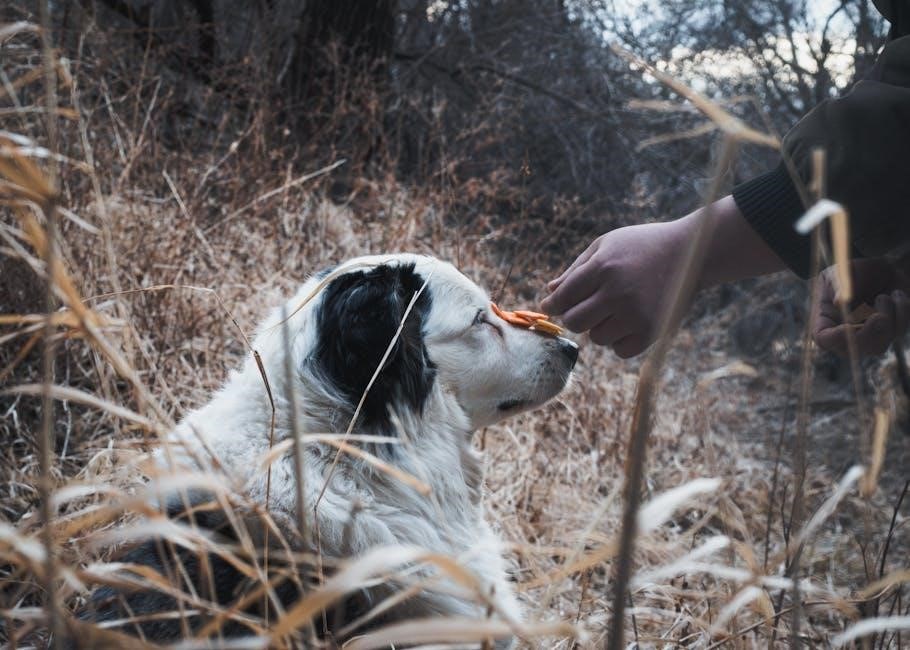
Consider your dog’s perspective; clear, concise signals are best. Sketch or photograph each signal, pairing it with the corresponding verbal cue. Utilize a document editor or graphic design software to arrange the signals neatly on a page. Ensure the chart is visually appealing and easy to read.
Save the completed chart as a PDF for easy printing and portability. A custom chart fosters consistency and clarity during training sessions. Remember to involve all family members in learning the signals to avoid confusion. This personalized approach strengthens the bond and enhances communication!
Resources for Printable Hand Signal Charts
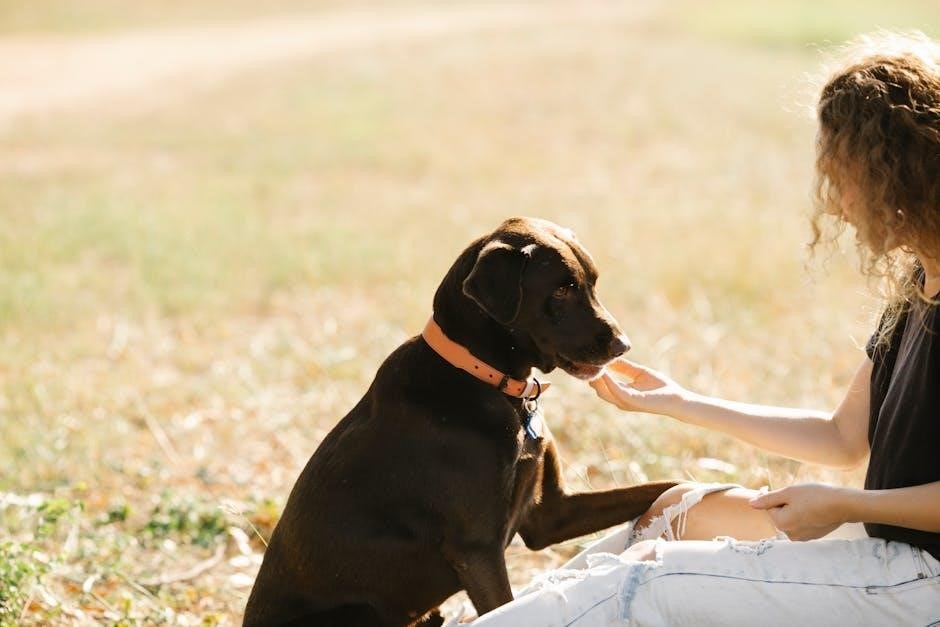
Numerous online resources offer readily available dog training hand signals chart PDFs. Dogster provides an infographic showcasing basic signals, offering a quick visual guide for beginners. Reddit’s r/Dogtraining community frequently shares printable charts compiled by experienced trainers, often reflecting lure-based origins and leash-related history.
The Humane Society of Broward County offers a basic obedience chart, specifically detailing the “Sit” signal – a straight arm with a downward-facing palm. Several websites specialize in canine training, providing downloadable PDFs covering a range of commands, from foundational to advanced tricks like “Speak” and “Roll Over”.
A simple online search for “printable dog hand signal chart” yields a wealth of options. Remember to preview the chart to ensure the signals align with your training philosophy and are easily understandable for both you and your dog. Utilizing these resources jumpstarts your visual communication journey!
Tips for Effective Hand Signal Training
Consistency is paramount when employing a dog training hand signals chart PDF. Pair each signal before the verbal cue, allowing your dog to anticipate the desired behavior. Dogs readily respond to visual cues, often with impressive accuracy, due to their reliance on body language.
Keep training sessions short and positive, reinforcing successful responses with rewards. Avoid overwhelming your dog with too many signals at once; introduce them gradually. Ensure your signals are clear, distinct, and easily visible to your canine companion.
Consider your dog’s breed and personality – some may learn faster than others. Remember the historical context; many signals evolved from leash-based commands. Adapt the chart to suit your dog’s needs and your training style. Patience and positive reinforcement are key to unlocking effective communication!
Troubleshooting Common Hand Signal Training Issues
Confusion can arise if signals are inconsistent or too similar. Review your dog training hand signals chart PDF to ensure clarity. If your dog isn’t responding, simplify the signal or break down the command into smaller steps. Consider if distractions are hindering focus during training sessions.
Regression can occur; revisit previously mastered signals with positive reinforcement. If a dog seems to understand the verbal cue but ignores the hand signal, emphasize the visual cue before the verbal one. Remember, some signals originated from leash movements, so ensure your hand gestures are distinct.
Adapt your approach based on your dog’s breed and personality. Patience is crucial! If problems persist, consult a professional dog trainer for personalized guidance. A well-designed chart is helpful, but understanding your dog’s learning style is essential for success.
Adapting Hand Signals for Different Dog Breeds and Personalities
Recognize that breed predispositions and individual personalities impact learning. Some breeds, like Border Collies, are highly visually oriented and may excel with hand signals. Others might require more repetition or different signal styles. A dog training hand signals chart PDF serves as a starting point, not a rigid rulebook.
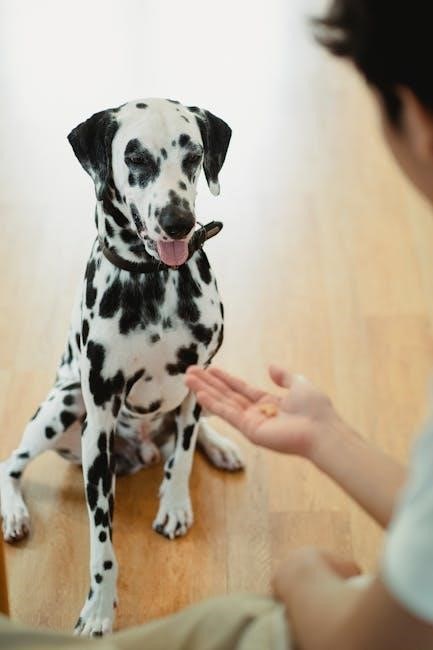
For sensitive dogs, use softer, less abrupt signals. Energetic breeds may respond better to larger, more enthusiastic gestures. Observe your dog’s reactions closely; adjust signal size and speed accordingly. Consider a dog’s age – puppies may need simpler signals than adults.
Don’t hesitate to modify signals to suit your dog’s understanding. If a standard signal isn’t working, experiment! The goal is clear communication. Remember, consistency is key, even with adaptations. Tailor your approach for optimal results and a stronger bond.