
Hanuman Chalisa: A Comprehensive Guide (Sanskrit PDF Focus)
This guide delves into the sacred Hanuman Chalisa‚ focusing on authentic Sanskrit PDF resources for study and recitation‚
exploring its profound spiritual significance and historical roots within Hinduism.
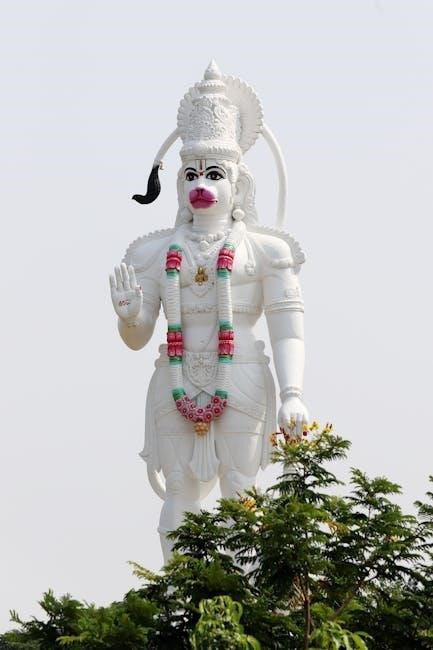
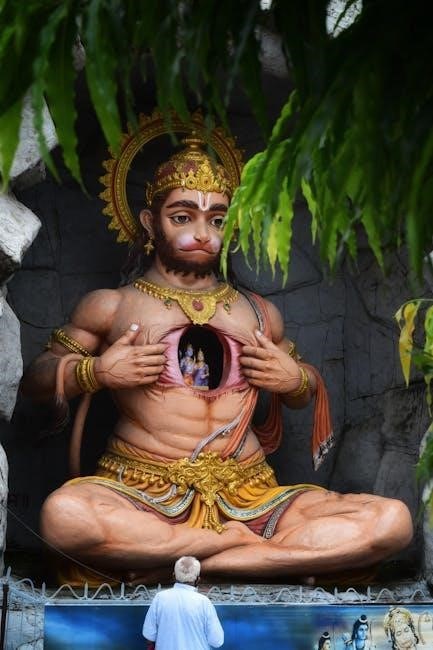
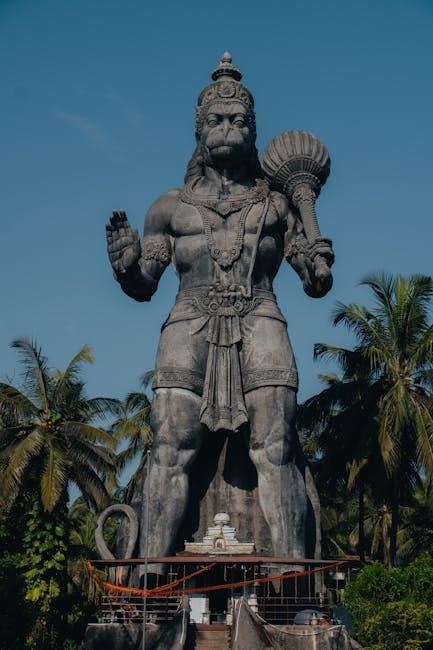
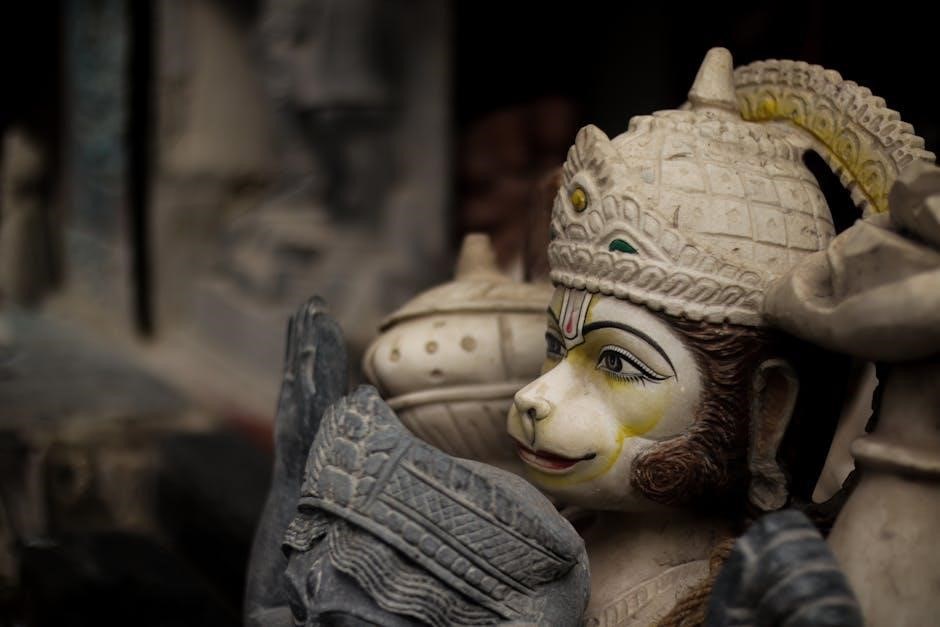
Hanuman‚ a central figure in Hindu mythology‚ is revered as a symbol of unwavering devotion‚ immense strength‚ and selfless service. He’s a key character in the epic Ramayana‚ serving Lord Rama with unparalleled loyalty and playing a pivotal role in his quest to rescue Sita. Often depicted with a monkey-like physique‚ Hanuman embodies both divine power and humility‚ making him accessible and beloved by devotees.
The Hanuman Chalisa‚ meaning “forty verses‚” is a devotional hymn dedicated to Hanuman. Composed by the 16th-century poet Tulsidas‚ it beautifully narrates the life and deeds of Hanuman‚ praising his virtues and seeking his blessings. Recitation of the Chalisa is believed to bestow courage‚ strength‚ and protection‚ fostering a deeper connection with the divine. Its accessibility and powerful verses have made it a widely practiced spiritual discipline amongst Hindus globally.
The Significance of the Hanuman Chalisa
The Hanuman Chalisa holds immense spiritual significance for devotees seeking strength‚ courage‚ and devotion. Its forty verses encapsulate Hanuman’s heroic deeds and unwavering loyalty to Lord Rama‚ serving as a powerful reminder of ideal discipleship. Reciting the Chalisa is believed to remove obstacles‚ grant protection from negative energies‚ and foster inner peace.
Beyond its devotional aspect‚ the Chalisa is considered a potent mantra‚ capable of transforming one’s life through consistent practice. It’s often recited during times of difficulty‚ offering solace and renewed hope. The hymn’s enduring legacy stems from its ability to connect individuals with Hanuman’s divine qualities‚ inspiring them to cultivate similar virtues within themselves. It’s a pathway to self-improvement and spiritual growth‚ deeply embedded in Hindu tradition.
Historical Context of the Hanuman Chalisa
The precise origins of the Hanuman Chalisa remain somewhat shrouded in mystery‚ though traditionally attributed to the 16th-century poet‚ Tulsidas. While the Ramayana‚ the foundational epic detailing Hanuman’s life‚ dates back centuries earlier‚ the Chalisa emerged as a distinct devotional practice during the Bhakti movement. This period emphasized personal devotion and accessibility to the divine‚ aligning perfectly with the Chalisa’s simple yet profound verses.
Early versions likely circulated orally before being transcribed‚ leading to variations in text. The Sanskrit roots of the Chalisa are evident‚ influencing its language and structure‚ even in the more commonly known Hindi adaptations. Understanding this historical context enriches appreciation for the Chalisa’s evolution and its enduring relevance within Hindu spiritual practice.
Understanding the Sanskrit Text
Exploring the original Sanskrit Hanuman Chalisa unveils nuanced meanings and deeper spiritual layers‚ requiring careful study and a foundational understanding of the language.
Origins of the Sanskrit Hanuman Chalisa
The precise origins of the Sanskrit Hanuman Chalisa remain somewhat shrouded in mystery‚ differing from the more widely known versions composed by Tulsidas in Awadhi Hindi. While Tulsidas’s Chalisa is incredibly popular‚ the Sanskrit rendition predates it‚ potentially originating centuries earlier. Scholarly consensus suggests roots in ancient devotional traditions focused on Hanuman’s unwavering devotion to Lord Rama‚ as depicted in the epic Ramayana.
Early iterations likely existed as oral traditions‚ passed down through lineages of devotees and ascetics. The formalization into a forty-verse composition in Sanskrit probably occurred to preserve the verses and facilitate structured worship. Finding definitive historical documentation proving the exact author and date is challenging‚ but textual analysis points to a period before the 16th century‚ coinciding with the flourishing of Sanskrit literature and devotional poetry. Accessing authentic Sanskrit PDFs allows researchers and practitioners to delve into these ancient roots.
Key Differences Between Sanskrit and Hindi Versions
The Sanskrit and Hindi Hanuman Chalisas‚ while both praising Hanuman’s virtues‚ exhibit significant distinctions. The Sanskrit version employs a more complex and nuanced vocabulary‚ characteristic of classical Sanskrit poetry‚ focusing on intricate descriptions of Hanuman’s attributes and divine powers. Conversely‚ Tulsidas’s Hindi Chalisa‚ written in Awadhi‚ prioritizes accessibility and emotional resonance for a broader audience.
Sanskrit utilizes elaborate meters and grammatical structures‚ demanding a deeper understanding of the language for accurate interpretation. The Hindi version‚ while beautiful‚ is comparatively simpler in its linguistic construction. Furthermore‚ certain verses and descriptions differ in emphasis and detail. Studying Sanskrit PDFs reveals subtle theological nuances absent in the Hindi rendition‚ offering a richer‚ more scholarly perspective on Hanuman’s significance. The choice between versions depends on individual preference and devotional goals.
Pronunciation Guide for Beginners
Navigating the Sanskrit Hanuman Chalisa requires attention to accurate pronunciation. Many sounds differ significantly from English or even Hindi. Resources accompanying Sanskrit PDF versions often include transliterations using the International Alphabet of Sanskrit Transliteration (IAST)‚ aiding beginners. Key challenges include retroflex consonants (ṭ‚ ḍ‚ ṇ) and nasal vowels (ṃ‚ ṇ).
Focus on vowel sounds – short and long variations are crucial. Practice differentiating between ‘a’ and ‘ā’‚ ‘i’ and ‘ī’. Online audio recitations paired with PDF texts are invaluable. Pay close attention to the ‘ś’ (sh) and ‘ṣ’ (sh) sounds‚ often subtle but important. Consistent practice‚ utilizing available phonetic guides within the PDF resources‚ will gradually improve clarity and reverence in your chanting.
Accessing and Utilizing Sanskrit PDF Resources
Locating authentic Sanskrit Hanuman Chalisa PDFs requires careful selection‚ prioritizing reputable sources and verifying translations for accuracy and devotional integrity.
Reputable Sources for Sanskrit Hanuman Chalisa PDFs
Finding reliable Sanskrit Hanuman Chalisa PDFs necessitates discerning sources to ensure authenticity and accurate transliteration. Several online platforms and digital libraries offer these sacred texts‚ but caution is advised. Websites associated with established Hindu organizations and scholarly institutions are generally preferred.
Consider exploring digital archives of Sanskrit manuscripts‚ often maintained by universities or research centers dedicated to Indology. These resources frequently provide meticulously scanned and verified PDFs. Additionally‚ websites specializing in Vedic literature and Hindu scriptures can be valuable.
Beware of unofficial sources or those with questionable origins‚ as they may contain errors or inaccurate interpretations. Always cross-reference multiple PDFs to confirm consistency and accuracy. Look for PDFs that include detailed commentary or explanations from respected scholars. Prioritize sources that offer both the Sanskrit text and a reliable transliteration in Roman script for easier pronunciation and understanding.
Analyzing Different PDF Formats and Translations
Sanskrit Hanuman Chalisa PDFs vary significantly in format and translation approaches‚ demanding careful analysis. Some PDFs present a simple transliteration‚ while others include word-by-word meanings‚ grammatical breakdowns‚ and detailed commentaries. The chosen format depends on your Sanskrit proficiency and study goals.
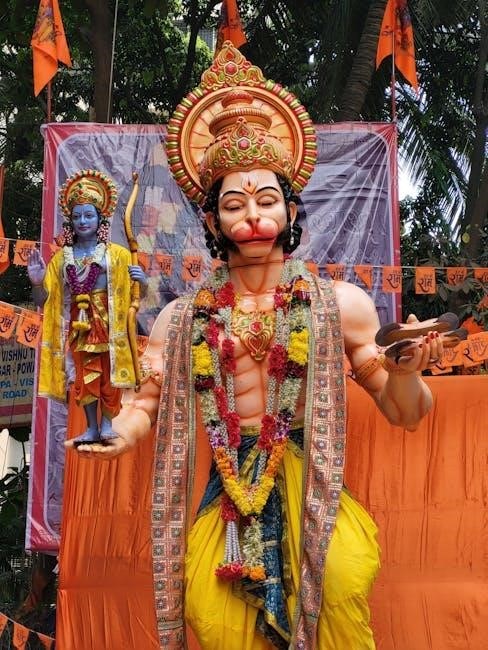
Assess the transliteration scheme used; variations exist (IAST‚ Harvard-Kyoto)‚ impacting readability. Compare multiple translations to identify nuances and interpretative differences. Note whether the PDF offers a literal translation or a more interpretive rendering‚ influencing understanding.
Examine the PDF’s source and the translator’s credentials. Scholarly translations are generally more reliable than those from unknown sources. Consider PDFs that highlight key philosophical concepts and symbolism within the verses. Look for features like searchable text and clear formatting to enhance the study experience.
Tools for Reading and Studying Sanskrit PDFs
Effectively studying Sanskrit Hanuman Chalisa PDFs requires specialized tools. Digital PDF readers like Adobe Acrobat or Foxit PDF offer basic functionalities – highlighting‚ note-taking‚ and searching. However‚ dedicated Sanskrit study tools significantly enhance the experience.
Sanskrit dictionaries (Monier-Williams) are crucial for deciphering unfamiliar words. Online resources like Sanskrit Documents offer searchable dictionaries and grammatical tools. Consider using a Sanskrit font that accurately displays Devanagari script.
For pronunciation assistance‚ utilize online Sanskrit pronunciation guides or software. Text-to-speech tools can read the verses aloud‚ aiding in correct articulation. Digital flashcard applications can help memorize key vocabulary and shlokas. Collaborative study platforms allow sharing notes and discussing interpretations with fellow learners.
Core Themes and Symbolism
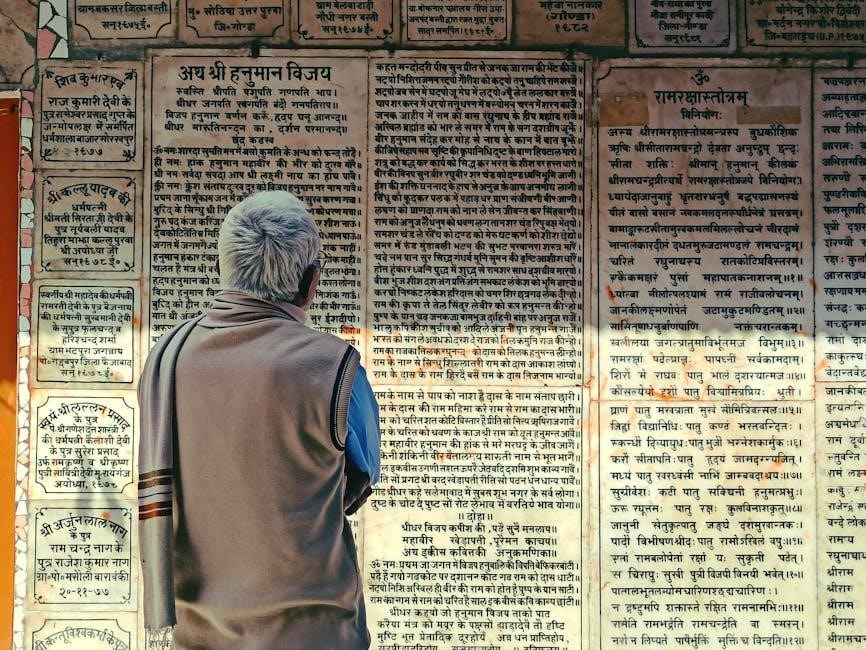
The Hanuman Chalisa embodies devotion‚ strength‚ and courage‚ mirroring Hanuman’s role in the Ramayana‚ and these themes resonate deeply within the Sanskrit text.
Hanuman’s Role in the Ramayana
Hanuman’s pivotal role within the Ramayana profoundly shapes the themes explored in the Chalisa‚ particularly concerning devotion and selfless service. He isn’t merely a powerful warrior‚ but a bhakta – a devoted follower – whose unwavering loyalty to Rama defines his character. The Sanskrit PDFs often emphasize this aspect‚ detailing Hanuman’s journey from a mischievous Vanara to Rama’s most trusted ally.
His contributions extend beyond physical strength; Hanuman’s diplomatic skills‚ exemplified by his journey to Lanka‚ and his unwavering courage are central to Rama’s success. The Chalisa frequently references these heroic deeds‚ and understanding them within the broader context of the Ramayana enriches the recitation experience. Studying Sanskrit versions allows for a deeper appreciation of the nuances in describing Hanuman’s divine qualities and his integral part in the epic narrative.
The Meaning of ‘Chalisa’ ⸺ Forty Verses
The term ‘Chalisa’ directly translates to ‘forty’ in Sanskrit and Hindi‚ signifying the composition’s structure of forty verses. This numerical significance isn’t arbitrary; forty often represents a complete cycle or a period of testing and purification in Hindu traditions. Sanskrit PDF versions of the Hanuman Chalisa often include commentaries explaining this symbolism‚ linking it to spiritual disciplines and the path to liberation.
The forty verses aren’t simply a random collection of praises; they systematically narrate Hanuman’s virtues‚ his devotion to Rama‚ and the power of his name. Analyzing the Sanskrit text reveals a carefully crafted poetic structure designed to invoke Hanuman’s blessings. The PDF resources frequently highlight the importance of reciting all forty verses to fully experience the Chalisa’s transformative potential‚ offering a holistic spiritual practice.
Symbolism of Hanuman’s Attributes (Strength‚ Devotion)
Hanuman embodies unparalleled strength‚ not merely physical‚ but also mental and spiritual fortitude. Sanskrit PDF analyses of the Chalisa emphasize this‚ detailing how his power stems from unwavering bhakti – devotion – to Rama. This devotion isn’t blind faith‚ but a conscious‚ selfless surrender‚ a key theme explored within the verses.
The monkey form itself is symbolic‚ representing the restless mind that needs to be disciplined and focused on the divine. PDF resources often explain how Hanuman’s ability to leap across the ocean signifies overcoming obstacles and limitations. His attributes‚ meticulously detailed in Sanskrit texts‚ serve as aspirational ideals for devotees‚ encouraging them to cultivate similar qualities through dedicated practice and recitation of the Chalisa.
Decoding the Verses
This section meticulously breaks down the Sanskrit verses of the Hanuman Chalisa‚ revealing nuanced meanings and exploring the profound symbolism embedded within each shloka.
Breakdown of Key Sanskrit Words and Phrases
Understanding the Sanskrit lexicon is crucial for a deeper appreciation of the Hanuman Chalisa. Many words carry layered meanings‚ extending beyond simple translations. For instance‚ “Vayuputra” directly translates to “son of Vayu” (the wind god)‚ establishing Hanuman’s divine parentage and inherent power. “Ramabhakta” signifies unwavering devotion to Lord Rama‚ a central theme throughout the Chalisa.
The phrase “Mahabala” denotes immense strength‚ not merely physical prowess‚ but also spiritual fortitude. “Budhiheen” often misinterpreted‚ doesn’t imply foolishness‚ but rather a transcendence of worldly intellect through complete surrender to Rama’s will. Analyzing prefixes and suffixes – like “a-” denoting negation – unlocks further subtleties.
Furthermore‚ recognizing the grammatical structure – cases‚ tenses‚ and verb conjugations – reveals the precise relationships between words and the intended emphasis of each verse. Accessing Sanskrit dictionaries alongside PDF resources is highly recommended for accurate interpretation and a richer understanding of the Chalisa’s poetic beauty.
Interpretation of Specific Shlokas (Verses)
Delving into individual shlokas reveals the nuanced narrative of Hanuman’s glory. For example‚ the opening verse‚ invoking Shiva as a facilitator‚ establishes a sacred context for Hanuman’s story. Subsequent verses detailing Hanuman’s physical attributes aren’t merely descriptive; they symbolize his divine qualities – strength‚ agility‚ and unwavering focus.
Verses describing his role in assisting Rama during the Lanka expedition highlight selfless service and devotion. The Chalisa doesn’t simply recount events; it emphasizes the underlying principles of righteousness and unwavering faith. Analyzing the imagery – mountains moved‚ oceans crossed – represents overcoming internal obstacles.
PDF resources often provide commentaries offering multiple interpretations‚ enriching understanding. Comparing different translations reveals subtle variations in emphasis. Studying these verses within the broader context of the Ramayana deepens appreciation for Hanuman’s pivotal role and the Chalisa’s spiritual power.
The Importance of Repetition and Chanting
Repetition‚ or japa‚ is central to the efficacy of the Hanuman Chalisa. Chanting isn’t merely reciting words; it’s a transformative practice believed to invoke Hanuman’s divine energy. The rhythmic repetition focuses the mind‚ fostering inner peace and clarity; Sanskrit PDFs often emphasize the correct pronunciation‚ crucial for maximizing the vibrational impact of each syllable.
The ‘Chalisa’ – forty verses – is considered a complete cycle‚ offering a holistic invocation. Consistent chanting‚ as recommended in many resources‚ cultivates devotion and strengthens the connection with Hanuman.
PDF study guides frequently detail the benefits of regular recitation‚ ranging from increased courage to overcoming obstacles. The power lies not just in understanding the meaning‚ but in experiencing it through dedicated practice. The act of chanting itself is a form of worship‚ a pathway to spiritual growth.
Benefits and Practices
Sanskrit Hanuman Chalisa recitation offers peace‚ strength‚ and devotion. Regular practice‚ guided by PDF resources‚ unlocks courage‚ removes obstacles‚ and fosters spiritual well-being.
Reported Benefits of Reciting the Hanuman Chalisa
Numerous devotees attest to the transformative power of reciting the Hanuman Chalisa‚ particularly when engaging with the original Sanskrit text via PDF resources. Consistent chanting is believed to instill immense courage‚ bolstering one’s ability to overcome life’s challenges with unwavering resolve. Many report a significant reduction in fear and anxiety‚ replaced by a profound sense of inner peace and tranquility.
Furthermore‚ the Chalisa is said to enhance devotion and strengthen one’s connection to the divine. Practitioners often experience increased mental clarity‚ improved focus‚ and a heightened sense of spiritual awareness. The Sanskrit verses‚ when understood and recited‚ are thought to purify the mind and heart‚ fostering humility and selfless service. Accessing accurate Sanskrit PDFs is crucial for proper pronunciation and comprehension‚ maximizing these benefits. It’s also believed to remove obstacles‚ grant protection‚ and accelerate spiritual progress.
Recommended Times and Frequency of Recitation
Optimal times for reciting the Hanuman Chalisa‚ especially utilizing Sanskrit PDF versions for accurate pronunciation‚ are generally considered to be during auspicious moments. These include Tuesdays – Hanuman’s dedicated day – and Saturdays. Early mornings‚ before sunrise‚ are particularly potent‚ fostering a peaceful and receptive state of mind. Many devotees also recite it during times of distress or when facing challenges‚ seeking Hanuman’s protective energy.
Regarding frequency‚ daily recitation is highly encouraged for sustained benefits. While reciting once a day is beneficial‚ many aim for three‚ seven‚ or even eleven times. Consistency is key; even a short‚ sincere recitation is more valuable than infrequent‚ lengthy ones. When using a Sanskrit PDF‚ dedicating time to understand the meaning alongside chanting amplifies the spiritual impact‚ deepening your connection to Hanuman’s divine grace and unwavering devotion.
Incorporating the Chalisa into Daily Spiritual Practice
Integrating the Hanuman Chalisa‚ particularly through Sanskrit PDF study‚ into your daily routine can profoundly enrich your spiritual life. Begin by establishing a dedicated space and time‚ free from distractions. Utilizing a Sanskrit PDF allows for precise pronunciation and a deeper understanding of the verses’ meaning‚ enhancing the meditative experience.
Combine recitation with other practices like meditation‚ yoga‚ or puja. Visualize Hanuman’s form and qualities – strength‚ devotion‚ and courage – while chanting. Consider studying the Sanskrit commentary alongside the verses to unlock hidden layers of symbolism. Regular practice cultivates inner peace‚ strengthens faith‚ and fosters a closer connection with the divine. The Chalisa‚ when approached with sincerity and reverence‚ becomes a powerful tool for self-transformation and spiritual growth.

Hanuman in Popular Culture
Hanuman’s enduring image‚ often depicted in film and television‚ reflects his strength and devotion‚ inspiring adaptations and continued reverence across generations.
Hanuman’s Depiction in Movies and Television
Hanuman’s presence in visual media is extensive‚ frequently appearing as a pivotal character within adaptations of the Ramayana epic. Notably‚ the 1976 Hindi biopic starring Dara Singh marked a significant milestone‚ being one of the first films solely dedicated to Hanuman’s life and heroic deeds.
These portrayals consistently emphasize his unwavering devotion to Lord Rama‚ his extraordinary physical strength‚ and his selfless service. Modern television series and animated films continue to reimagine Hanuman’s stories for new audiences‚ often highlighting his courage and embodying him as a symbol of righteousness. While the Hanuman Chalisa itself isn’t directly the subject of these productions‚ the underlying themes and virtues it celebrates are consistently represented. The visual depictions reinforce Hanuman’s cultural significance and inspire continued devotion.
Hanuman as a Symbol of Strength and Courage
Hanuman universally embodies unparalleled strength‚ not merely physical prowess‚ but also immense mental fortitude and unwavering courage. His legendary leap across the ocean to Lanka‚ detailed in the Ramayana‚ exemplifies his extraordinary capabilities and resolute determination. He isn’t simply a powerful figure; he represents selfless service and unwavering loyalty to a righteous cause.
This symbolism resonates deeply within Hindu culture‚ inspiring individuals to overcome obstacles and embody similar virtues. The Hanuman Chalisa‚ through its verses‚ reinforces these qualities‚ encouraging devotees to cultivate inner strength and bravery. Hanuman’s depiction transcends mythology‚ becoming a potent symbol of resilience and unwavering faith‚ offering a powerful archetype for navigating life’s challenges with courage and devotion.
The Enduring Legacy of Hanuman in Hinduism
Hanuman’s influence within Hinduism remains profoundly significant‚ extending far beyond his role in the Ramayana. Revered as a chiranjeevi – immortal – he is believed to be eternally present‚ safeguarding devotees and embodying divine grace. Temples dedicated to Hanuman are ubiquitous across India‚ attracting millions of worshippers seeking blessings of strength‚ courage‚ and devotion.
The continued recitation of the Hanuman Chalisa‚ particularly in Sanskrit PDF formats for accurate study‚ demonstrates his enduring relevance. His symbolism transcends religious boundaries‚ inspiring individuals with his selfless service and unwavering loyalty. Hanuman’s legacy isn’t merely historical; it’s a living tradition‚ actively shaping spiritual practices and moral values within the Hindu faith‚ ensuring his continued veneration for generations to come.